


Cosmos capoeira, founded by
Mestre Russo in 1992, in Rio de Janeiro.
Cosmos capoeira, founded by
Mestre Russo in 1992,
in Rio de Janeiro.

In Glasgow Ilé Malungo starts in 2026
with Christiano (Coringa) Mere
In Glasgow Cosmos starts in 2026 with Christiano
(Coringa) Mere
Ilé Malungo means, Ilê: House / Home from Yoruba language and Malungo: Comrade, companion of the ocean crossing Kikongo, Bantu language. Ilé Malungo - The house of body in transit.
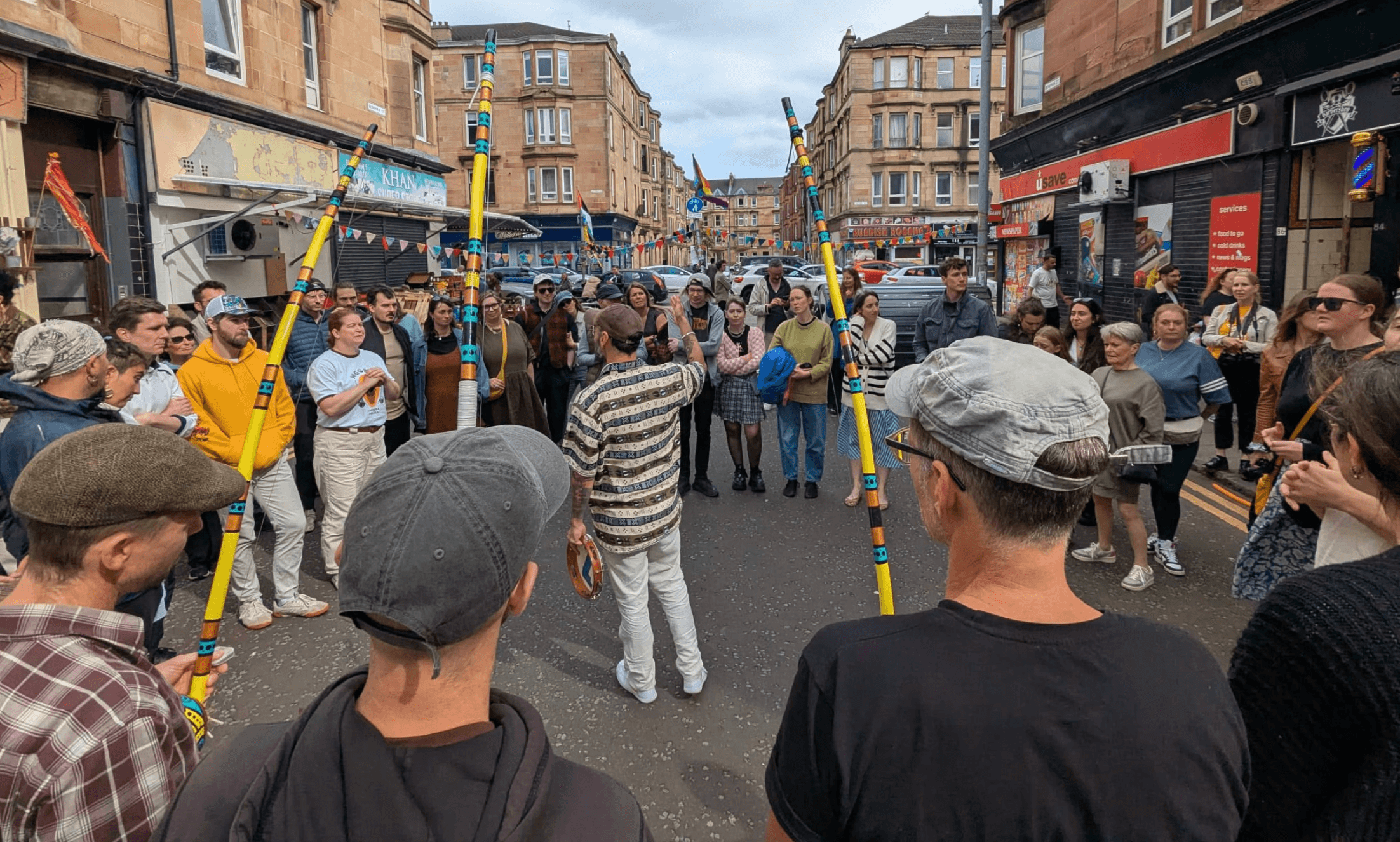
Uma Roda of movements
lê Malungo is a dedicated space to the teaching and lived experience of capoeiragem. The foundation is built upon the wisdom of Cosmos Capoeira, passed down by Mestre Russo.
Here in Glasgow, a space has been built dedicated to keeping this Afro-Brazilian culture alive. It acts as a home for people in transit, where the traditions of Capoeira and its Brazilian roots are nurtured. In daily practice, an environment of active respect is ensured: racism, homophobia, and misogyny are not tolerated, as Capoeira is understood to be an ongoing practice of freedom and dignity. Here, the philosophy is grounded in playing the game together, where the memory, the struggles, and the lived experiences of those who shaped this culture are honoured.
For those who arrive, the doors are open. It is asked only that they enter and observe the customs of the house.
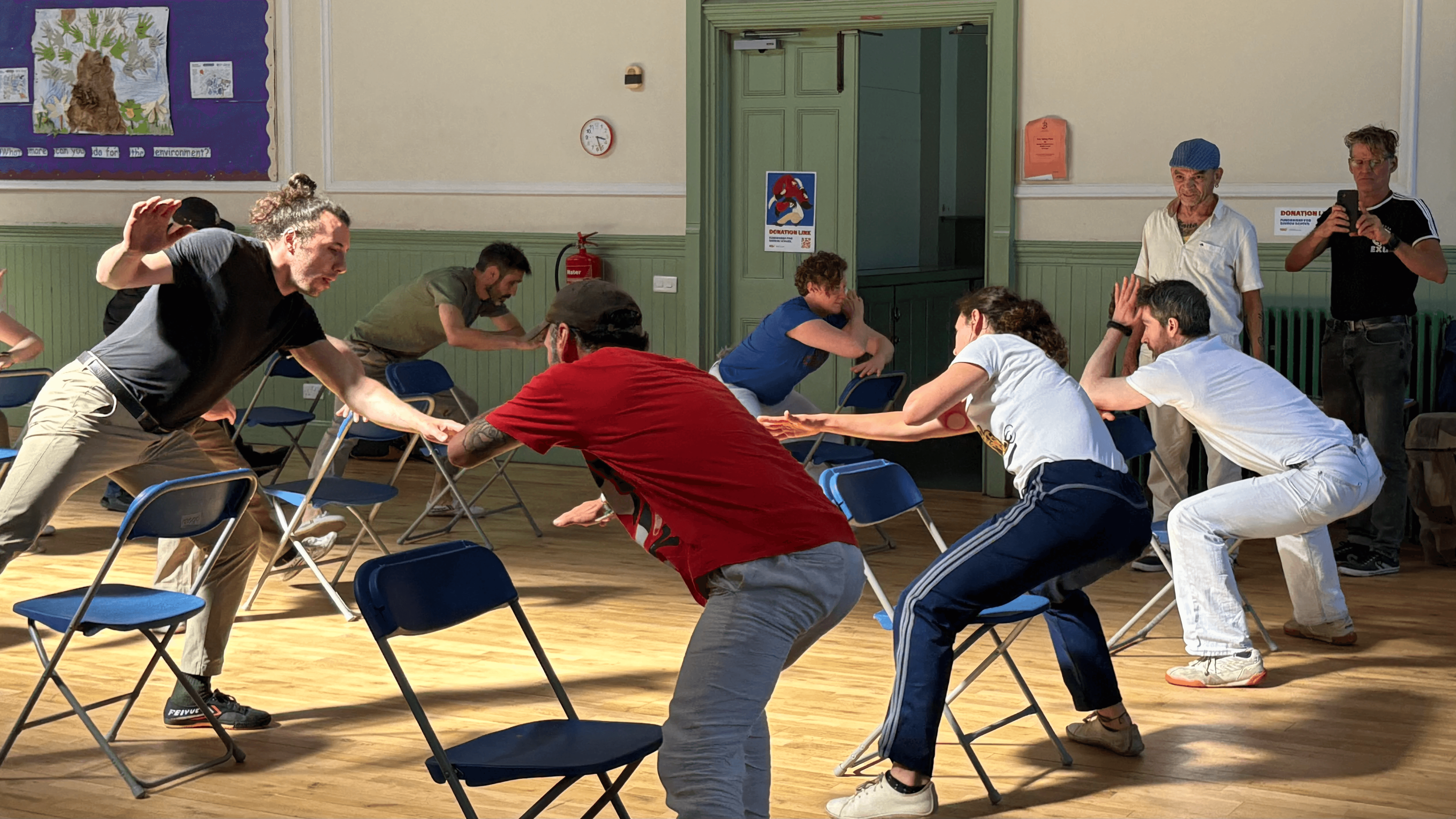
The ginga is understood as a state of mindfulness and movement, a way to prepare the body to respond to any situation inside and outside the game. Initial clumsiness is not a mistake; it is a natural step for each person to develop their own way of playing (vadiar).
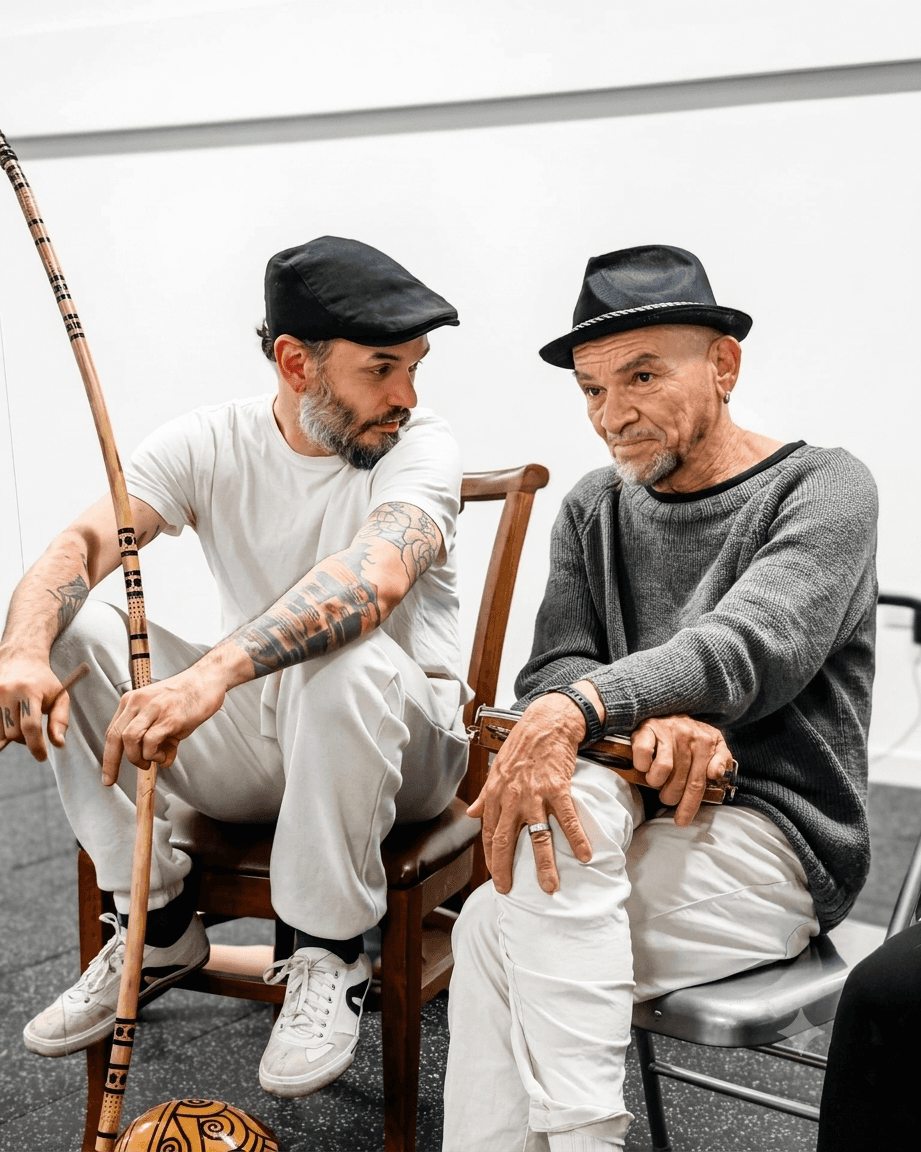
In this Ilé, guidance and care come from the elders. The teaching is supported by the experience of Mestre Russo, Mestre Carlão, and the bonds forged with other Mestras and Mestres of this art, and is delivered by Christiano Mere.
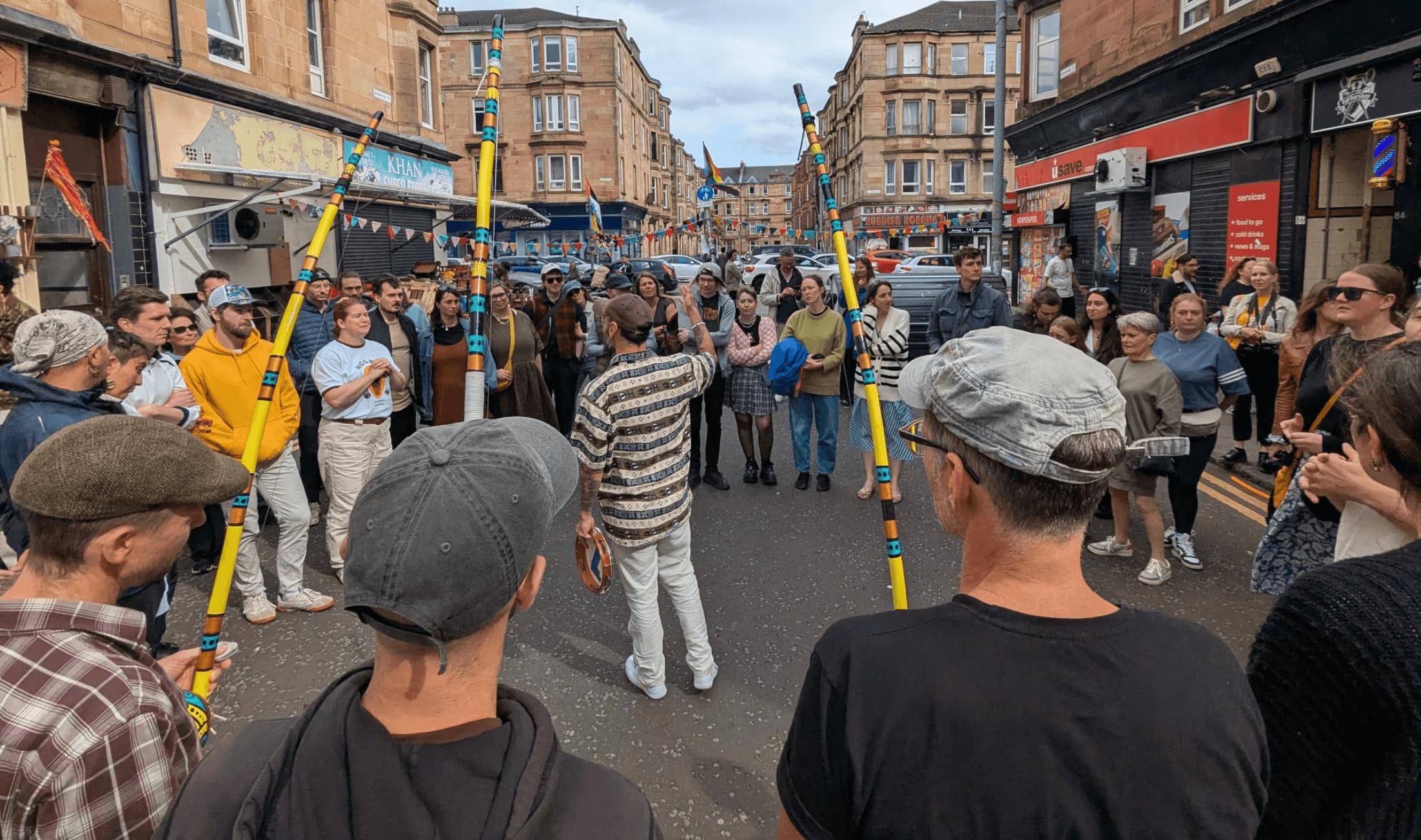
The intention is to conduct the rituals of a roda (gathering) with respect and care; it is understood that no one sustains the song (cantiga) alone, which is why we are a collective. It is a space fostered by those who came before and by those who play side by side, sharing the same chão. Ilé Malungo is an open invitation to all who wish to be a part of this roda.
"Somos a pedra lançada hoje para matar o pássaro ontem"
Ilé Malungo means, Ilê: House / Home from Yoruba language and Malungo: Comrade, companion of the ocean crossing Kikongo, Bantu language. The House of Comrades in Transit
Uma Roda of movements
Ilê Malungo is a dedicated space to the teaching and lived experience of capoeiragem. The foundation is built upon the wisdom of Cosmos Capoeira, passed down by Mestre Russo.
Here in Glasgow, a space has been built dedicated to keeping this Afro-Brazilian culture alive. It acts as a home for people in transit, where the traditions of Capoeira and its Brazilian roots are nurtured. In daily practice, an environment of active respect is ensured: racism, homophobia, and misogyny are not tolerated, as Capoeira is understood to be an ongoing practice of freedom and dignity. Here, the philosophy is grounded in playing the game together, where the memory, the struggles, and the lived experiences of those who shaped this culture are honoured.
For those who arrive, the doors are open. It is asked only that they enter and observe the customs of the house.
The ginga is understood as a state of mindfulness and movement, a way to prepare the body to respond to any situation inside and outside the game. Initial clumsiness is not a mistake; it is a natural step for each person to develop their own way of playing (vadiar).
In this Ilé, guidance and care come from the elders. The teaching is supported by the experience of Mestre Russo, Mestre Carlão, and the bonds forged with other Mestras and Mestres of this art, and is delivered by Christiano Mere.
The intention is to conduct the rituals of a roda (gathering) with respect and care; it is understood that no one sustains the song (cantiga) alone, which is why we are a collective. It is a space fostered by those who came before and by those who play side by side, sharing the same chão. Ilé Malungo is an open invitation to all who wish to be a part of this roda.
"Somos a pedra lançada hoje para matar o pássaro ontem"
Ilé Malungo means, Ilê: House / Home from Yoruba language and Malungo: Comrade, companion of the ocean crossing Kikongo, Bantu language. The House of Comrades in Transit
Uma Roda of movements
Ilê Malungo is a dedicated space to the teaching and lived experience of capoeiragem. The foundation is built upon the wisdom of Cosmos Capoeira, passed down by Mestre Russo.
Here in Glasgow, a space has been built dedicated to keeping this Afro-Brazilian culture alive. It acts as a home for people in transit, where the traditions of Capoeira and its Brazilian roots are nurtured. In daily practice, an environment of active respect is ensured: racism, homophobia, and misogyny are not tolerated, as Capoeira is understood to be an ongoing practice of freedom and dignity. Here, the philosophy is grounded in playing the game together, where the memory, the struggles, and the lived experiences of those who shaped this culture are honoured.
For those who arrive, the doors are open. It is asked only that they enter and observe the customs of the house.
The ginga is understood as a state of mindfulness and movement, a way to prepare the body to respond to any situation inside and outside the game. Initial clumsiness is not a mistake; it is a natural step for each person to develop their own way of playing (vadiar).
In this Ilé, guidance and care come from the elders. The teaching is supported by the experience of Mestre Russo, Mestre Carlão, and the bonds forged with other Mestras and Mestres of this art, and is delivered by Christiano Mere.
The intention is to conduct the rituals of a roda (gathering) with respect and care; it is understood that no one sustains the song (cantiga) alone, which is why we are a collective. It is a space fostered by those who came before and by those who play side by side, sharing the same chão. Ilé Malungo is an open invitation to all who wish to be a part of this roda.
"Somos a pedra lançada hoje para matar
o pássaro ontem"
Ilê Malungo Capoeira Classes
Every Thursday, from 6:30pm to 8:30pm
Location: Pollokshields Community Centre,
Kenmure Street, Glasgow
G41 2NT
Supporting our Ilê:
We sustain our space and safeguard this practice through a solidarity-based contribution system designed to keep participation accessible. These contributions can be used to cover weekly or monthly classes. Our monthly cost is related to the venue hire of £20 per class.
£10–£25: For those whose essential needs are comfortably met and who are able to contribute more towards sustaining the community.
£5–£10: For those managing household expenses and daily responsibilities, with less flexibility at the end of the month.
£1–£5: For fellow travellers navigating financial difficulty or periods of uncertainty.
Supporting our Ilê:
We sustain our space and safeguard this practice through a solidarity-based contribution system designed to keep participation accessible. These contributions can be used to cover weekly or monthly classes. Our monthly cost is related to the venue hire of £20 per class.
£10–£25: For those whose essential needs are comfortably met and who are able to contribute more towards sustaining the community.
£5–£10: For those managing household expenses and daily responsibilities, with less flexibility at the end of the month.
£1–£5: For fellow travellers navigating financial difficulty or periods of uncertainty.
Contact us


Ponta-cabeça is part of Christiano Mere’s artistic practice.
Ponta-cabeça is part of Christiano Mere's artistic practice.
Contact us
Ponta-cabeça is part of Christiano Mere’s artistic practice.